Monday, September 28, 2026

The Silenced Dialogue || Blog 6

 Reading: Delpit handout & “The Silenced Dialogue” by Lisa Delpit

Option Chosen: Connections

  In both readings, Lisa Delpit's main points are outlined and then given in depth in the article. She educates about "the culture of power" and how it refers to the rules, behaviors, and expectations that are established by groups in society with power. She then elaborates, stating how these rules influence students and how they are expected to behave and learn in school. Delpit also argues that teachers (and students) should respect others' cultural identities and listen to the voices of black educators, as their perspectives and experiences are brushed past or often excluded from discussions. 

  Her views connect to the message in the movie "Teach Us All" as both demonstrate how power (whether it's government or group power) and inequality affect education (achievement gaps, unequal treatment, etc.). More specifically, both speak about how education can lead to opportunities and is a fundamental right. However, this does not mean that every student will receive an equal education unfortunately, with equal opportunities and diverse perspectives from teachers or equal opportunities to learn and succeed. We see this in the movie through the experiences of the Little Rock Nine, segregation within the New York school system, and discrimination against Latin students. Particularly in Los Angeles, when it came to the Mendez family's experience. 

  The main argument in "The Silenced Dialogue" also connects to the movie "Precious Knowledge" as both demonstrate how power and culture influence education. Delpit talks about the culture of power and how some perspectives are valued in school more than others. Similarly, in the movie Precious Knowledge, it shows how early on Latin students were banned from speaking Spanish in school. The implementation of ethnic studies later on made students feel empowered and connected to history and their cultural backgrounds. However, the struggle over power continued when it influenced education, with Tom Horne banning the ethnic studies program in Tucson. 

The Silenced Dialogue: Lisa Delpit (Video) – Alexia's Approachhttps://www.youtube.com/shorts/fnjKmNmlINc

Reflection: I really liked this reading; it related to what we've been reading/watching but put a spin on it. In the sense that the author was advocating for diversity amongst teacher perspectives and focused on the issue of power rather than advocating solely for ethnic studies. My question is what does the author mean by "issues of power are enacted in the classroom" and are teachers aware of these issues of power.

AI Statement: I used AI for this post to assist me in organizing my (what was) word soup into paragraphs that made more sense and were easier to follow. 


Tuesday, September 22, 2026

The Academic and Social Value of Ethnic Studies || Blog 5

 Text: "The Academic and Social Value of Ethnic Studies" by Christine E. Sleeter 

Option Chosen: Reflection 

In this reading, Sleeter advocates for ethnic studies to be implemented into the school system. She explains how, since the late 1960s, educators began advocating for diversity amongst the U.S. population to be reflected in what they teach and in textbooks, since schools originally didn't teach other perspectives outside the mainstream one. However, the progress in getting diversity into the classroom halted when greater problems for the nation came, causing efforts for inclusive materials to decrease. When it came to the classroom, students would often learn American values, while important people and events were brushed past so that stories of white people could remain in the spotlight. Students in the classroom also generally learned that racism existed in the past, not understanding that it's still actively happening today. This is because racism, along with many other historical concepts, is often taught as something that happened in the past rather than an issue that continues to affect society. While this is pointed out as an issue (obviously), the author also points out a larger problem, which is the knowledge gap between white students and students of color. Interviews showed that fifth graders of color had started articulating a sense of racial oppression and recognized that the Bill of Rights didn't grant rights to everyone. While white fifth graders were under the belief that the Bill of Rights did grant every individual rights and that the U.S. was "being built on progress, democracy, and opportunity for all". We can clearly see the knowledge gap here, which reflects back on educators and the materials and ideas that are chosen to be included in classroom lessons. The main argument of this reading reminds me of the struggle and main argument Nikole Hannah-Jones makes in The 1619 Project. In her preface, she explains how what she read and learned in her classes provided her with little information about African Americans; essentially when they were “unavoidable” had they been present in learning (ex., slavery). Therefore, she argues that the American public’s understanding of the past is often vague and limited because many perspectives and stories are not taught in schools. Both Sleeter and Hannah-Jones show how, when we leave important stories and studies out of the classroom/lessons, it can create an incomplete understanding of history for society and students.

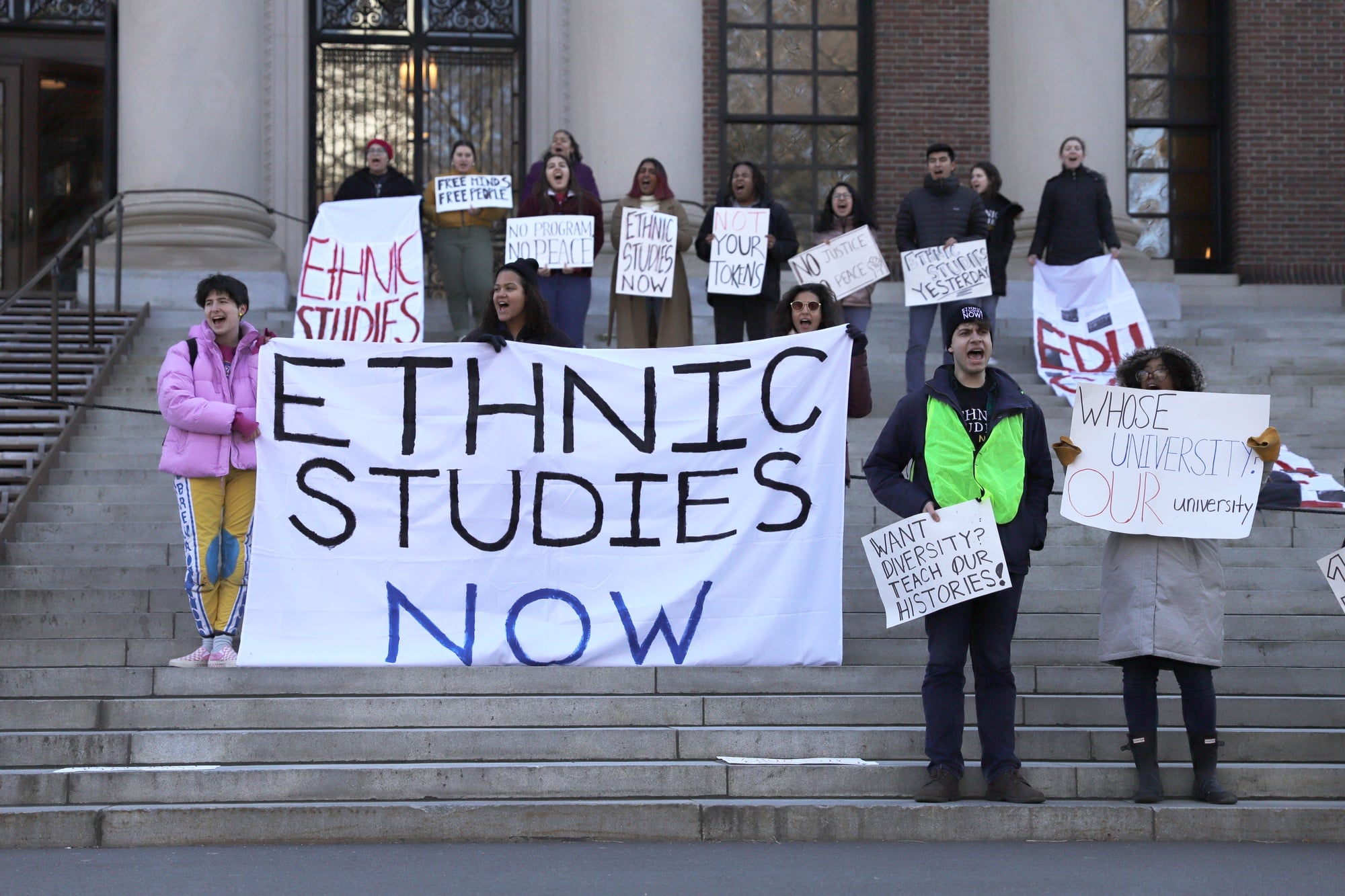
Ethnic Studies Must Begin in Our K-12 Schools | The Harvard CrimsonWhy Ethnic Studies?

Personal Comment: I completely agree with the author's point that students should have ethnic studies, at the very least starting in high school. It's so important to understand the history of others and both perspectives of an issue (even in everyday disagreements) before fully forming an opinion. By not having ethnic studies, it cheats students out of a proper knowledge of historical events and individuals that shaped modern-day society. 

AI Response: I did not use AI for this post 

Wednesday, September 16, 2026

Shifting the Paradigm || Blog 4

 Text:  "Shifting the Paradigm from Deficit Oriented Schools to Asset Based Models: Why Leaders Need to Promote an Asset Orientation in our Schools" by Shannon Renkly & Katherine Bertolini

Option chosen: Argument 

NOTE: I'd actually recommend watching the super short clip I attached; it helped me get a better perspective of why we should switch models (hopefully it works for everyone!)

 In the reading "Shifting the Paradigm", the authors argue that students can reach greater achievement, self-confidence, and leadership skills when school systems shift from the deficit model to the asset model. They support this argument through what they have seen in the world, concrete data from the Search Institute, as well as the ELCC standards. From these sources/observations, the authors explain to the readers that the deficit model emphasizes what a student cannot do; this is usually under the assumption that they are not trying hard enough. Instead, schools should be replacing this model with the asset model, which focuses on what a student can do, including their skills and abilities. I believe the authors strongly advocate for migrating away from the deficit model and replacing it with the asset model because they provide many detailed statements of the benefits of focusing on students strengths throughout the reading. The reading states that when schools, and more specifically teachers, focus on asset development, students are more likely to demonstrate fewer risky behaviors and contribute to having stronger communities. The authors also explain that the asset model isn't just applicable to students but can also apply to teachers, such as through teacher evaluations. Adults should take account of this approach as well. This is done and stated so everyone can essentially contribute to their communities growing stronger, supporting children in education, and help develop the positive behaviors and strengths they already demonstrate so they can "launch toward achievement". Overall, the authors argue that our education system still focuses too much on reducing risky behaviors and pointing out what children are doing wrong, which reflects the characteristics of the deficit model, rather than building upon their preexisting strengths. They also put emphasis on the importance that comes with providing more youth programs, resources, and opportunities that promote asset development. Therefore, according to the authors, instead of primarily focusing on what students lack, we should help them build upon the foundation of the strengths they already have. By doing so, students can develop more assets even at older ages, feel more connected to adults in their life, and reduce those risky behaviors.

 Approaching Marginalized Populations from an Asset Rather Than a Deficit  Model of Education – User Generated EducationAsset vs Deficit

AI Statement: For this post, I did not use AI

Response: While I agree it's important to focus on the strengths that kids have, this reading "confused" me as it stated, "the education field is focusing too heavily on reducing risks, when a higher emphasis should be placed on building up student strengths". The reason I say it confused me is that we should still be focusing on reducing risks while building up strengths simultaneously; no one aspect should have more focus. For example, I think it would be positive to take an approach like "don't do that because...instead try...because it's something you're great at".

Wednesday, September 9, 2026

What "Counts" as Educational Policy || Blog 3

Text: "What “Counts” as Educational Policy? Notes toward a New Paradigm" by Jean Anyon

Option chosen: Quotes

      = quote summary

  The author Jean Anyon from the article "What Counts as Educational Policy? Notes toward a New Paradigm" looks at educational inequality caused by poverty and economic policies. Anyon tells the readers how these main issues affect students and the education system. As well as how some policies can be helpful (a new paradigm of education policy) or how they have a negative impact in our society in the education and financial aspect (federal minimum-wage policy). This was a rather loaded article, while it did mainly focus on the concept of poverty it had a lot of subcategories. Subcategories such as the workforce poverty statistics, problems associated with federal policies, and poverties effects on the development of children. Below you can find three quotes that I found best summarized this articles argument and were important to understand in a broken down sense. 

1. For my first quote I found the line of "Child poverty creates obstacles to full development and educational achievement" (pg 77). This quote is relevant as Anyon relates back to the main point of educational inequality and shows that improving education means we must first address and acknowledge poverty and the conditions that come with it, not just what happens inside the classroom. It stood out to me as it informed me poverty is so much deeper than money, it can be detrimental towards a child's ability to learn and have a fair spot in society.

2. The next quote I chose was "I show how job, wage, housing, tax, and transportation policies maintain minority poverty in urban neighborhoods, and thereby create environments that overwhelm the potential of educational policy to create systemic, sustained improvements in the schools" (pg 66). Anyon explains to the readers how poverty caused by these policies can make it tough for school systems to improve education and their buildings. It relates to the main argument as schools don't have the power to fix inequality on their own as the policies give them less funding, poor economic conditions, and less power.

3. Lastly I found the quote "Other federal K–12 policies have aimed specifically at increasing educational equity...these policies are generally thought to have expanded urban students’ educational opportunities". This one I believe is important to the text as the author covers a lot of policies that have negatively impacted school systems and the economy. But it's almost important to understand the positive side and policies we have used that have worked for society and education.


- I did not use AI for this post 

- Can a school district help decrease poverty by applying for grants to aid the students? And how often are policies that are actually helpful created or brought to the table. Because it seems there are more negative policies over helpful ones; maybe we need people like teachers giving their input on what works for the education system and students development. Rather than having those in power from the state and federal government creating policies that benefit them and the economy.

  Teachers learn about poverty impact


Wednesday, September 2, 2026

The Broken Model || Short History of American School

Text & video: "The Broken Model" by Sal Kahn

                        "Short History of American School" by ClassDismissedMovie

Option chosen:  Reflection 

      = Key lines to read


   After reading this chapter I learned a lot I didn't know before, such as how the education system isn't necessarily always changing nor easy to change; it was set up long ago and "hard to see around" as the author states. What we know now originated from 18th century Prussia (just a bit outdated) where it was a tax-supported public education and students were to be obedient and submit authority to "higher figures". Overall through the chapter It's clearly seen that the author believes our current education system limits students since it doesn't allow them to fully reach their potential when it comes to individuality and creativity. Many decades later things have changed in society and creativity is now necessary in the real world as well as the classroom and subjects you learn. But it's being limited due to our system keeping up with traditional classroom setups, standardized testing (which Kahn is skeptical of), and tracking (kills creativity) which the author relates to exclusion. As for the video, it touches upon how this model (Prussian Model) of school was "new" as kids used to learn at home; it states how Massachusetts was the first to have a board of education. It then covers Horace Mann and how he believed everyone was titled to an equal education and lobbied for the Prussian model to be adopted. He believed in what the Prussian model stood for (obedience, discipline, and testing) and wanted kids to be set up to become subordinated adults. We learn about Prussian philosopher Johan who essentially wanted school to destroy imagination through multiple aspects of how a school day is set up. Conformity and small schools had been pushed in the 1900's; they wanted society to come out functioning like a well oiled machine. 

Summary of the two: These two materials both cover the Prussian Model, the text focuses on a perspective "This model is outdated because..." and defines terms and gives them context. Such as talking about testing and how it can limit students by not fully demonstrating ones capability and don't truly help you retain information. Then the video digs deeper on what Kahn covered except its from an unbiased viewpoint simply elaborating on Horace Mann and Johan the philosopher. 


Reflection: This model makes me think of the Constitution, in the sense of change. This foundational document is outdated and doesn't exactly promote modern day equality or needs. Similar to the Prussian Model of which is outdated and just doesn't move alongside modern day society and its needs. Also similar to the model while the Constitution can be changed (amendments) its not exactly easy or often that a change or restructuring will/can happen.


- I did not use AI for this post

- My question after reading The Broken Model is have we tried to change it, if so how many times? and do teachers have liberty within their teaching or district to choose how to test kids knowledge and setup the classroom + how it functions. 


Tuesday, September 1, 2026

Privilege, Power, and Difference Blog


Text: Privilege, Power, and Difference ( Allan G Johnson )

Option: Quotes

  After reading chapters 1-3 of "Privilege, Power, and Difference" by Allan G. Johnson I decided I wanted to dig deeper on some sentences of the text and talk about quotes; specifically one from each chapter. To start, looking at page 3 in chapter 1 Johnson states "Clearly, we aren't getting along with one another, and we need to ask why not". This quote relates to the heavy racism and hatred that was occurring at the time and how people couldn't get past what's unfamiliar to them. It also encourages us (or the people of 1991) to analyze ourselves and the prejudices we publicly or subconsciously have and ask the question of why. This quote relates to the text as it is essentially the center of chapter 1 and "sets up" the other two chapters for us. It's relevant to the other chapters as Johnson sort of stems from that quote and looks at the "why" part of how society isn't clicking if we're capable of doing so. Moving onto page 7 in chapter 2 the line of "I'll benefit from the cultural...stealing something" talks about how at first glance from an outside impression society favors certain groups over another ergo that comes with benefits or cons. It relates to the text as the author explores themes throughout these chapters of how society is structured. Like how you can receive advantages which may go unnoticed if you get them or (as seen in chapter 1) disadvantages based off of your race, culture, or gender. Lastly I couldn't pick just one line as the whole list stuck out to me, I want to dig deeper on the "gender privilege list" on pages 30-32 in chapter 3. This list gives examples of privileges that occurred in the real world at the time, it shows how society has put a label on females and males. And overtime said groups receive privilege (or disadvantages) the more society pushes these labels of the inequality between genders. It's related to the text as it expands the readers knowledge of privilege based off a category and shows how it looks in everyday life. Its also related as it connects back to the concept of you often don't know you have privilege if you're the one with it and society from long ago structured itself and almost caused a feud between groups. 

- Above I have attached a picture of the author to put a face to the text, as well as a link to a video that talks about "invisible advantage" like our author did. Except in the video it encourages you to tap into empathy and how you can use privilege for the good of society.

- When preparing this post I did not use AI, I felt as if the text was so straightforward that I didn't need any tools to help break it down or expand it. I chose quotes which gave me creative freedom to personally elaborate on my ideas as well as keep in mind the key points of the authors without help. 

- While it is stated a lot throughout the text, I truly wanted to comment on how important it is to see and understand how our society used to be structured. While the treatment of people of different genders, religions, and races used to be a lot different and more brutal, like we saw with Rodney King. Society is still not completely ideal when it comes to privileges and who has them versus who doesn't as well as groups people get put into and labeled based off a first glance bias. To wrap up what I found most important I see it as we as a society still have bias and prejudice of which just goes to show how important it is to ask ourselves and critically think "what's going wrong in society thats still dividing us". 


Final blog || Blog 12

 When I look at everything we have done this semester, I truly have so many positives to make note of. Three things that stick out and will ...